
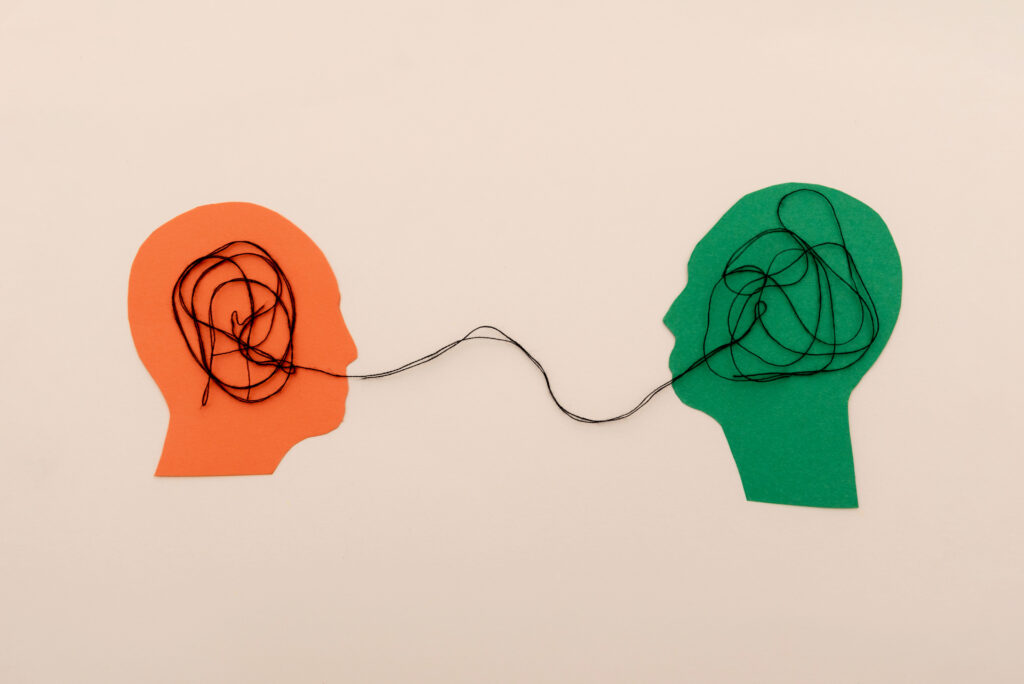
Communication is often described as the foundation of all relationships, and the quality of our communication determines the quality of our relationships.
Communication is not merely the exchange of information. It is the process through which people create meaning, establish trust, navigate conflict, express needs, and build emotional safety.
It is the way we feel seen, heard, and felt inside all our relationships.
Whether in romantic partnerships, families, friendships, workplaces, or therapeutic settings, healthy communication fosters connection and growth, while unhealthy communication creates misunderstanding, resentment, and emotional distance.
The challenge is that unhealthy communication is not always obvious. It does not always look like shouting, insults, or dramatic conflict. Sometimes it appears as silence, avoidance, subtle criticism, defensiveness, manipulation, or emotional withdrawal.
Likewise, healthy communication is not simply “being nice.” It involves honesty, vulnerability, accountability, emotional regulation, and mutual respect.
Understanding the difference between healthy and unhealthy communication can transform how we connect with others and, of course, ourselves.
Communication as a Reflection of Emotional Health
At its core, communication is an external expression of an internal state.
People do not communicate only through words. They communicate through tone, body language, facial expressions, timing, attention, and emotional presence. The way a person communicates often reflects their emotional regulation, self-awareness, attachment patterns, beliefs about relationships, and past experiences.
For example:
- A person who fears abandonment may find their behaviour leans towards becoming clingy or overly demanding.
- A person who grew up around criticism may become defensive.
- Someone who learned that emotions were unsafe may avoid difficult conversations altogether.
- A person with strong emotional awareness may communicate openly while maintaining respect for others and themselves.
Healthy communication therefore begins long before words are spoken. It begins with emotional awareness.
What Healthy Communication Looks Like
Healthy communication creates understanding rather than victory.
The goal is not to win an argument or prove someone wrong. The goal is to hear the other person, strengthen understanding, and preserve dignity and connection. And remember, we don’t always have to agree.
1. Emotional Responsibility – One of the hallmarks of healthy communication is taking responsibility for one’s own emotions.
Instead of saying, “You make me angry,” a healthier statement might be, “I feel angry when this happens” – note the use of ‘I’ rather than ‘you’. This distinction really matters because it shifts communication from blame to ownership.
Healthy communicators understand that while others may influence their emotions, they remain responsible for managing and expressing their own emotions constructively.
2. Active Listening – Most people listen to respond. Healthy communicators listen to understand.
Active listening involves:
- Giving full attention
- Avoiding interruptions
- Asking clarifying questions
- Reflecting back what was heard
- Validating emotions even when disagreeing
Validation is something that is often misunderstood. Validation does not mean agreement. It means acknowledging that another person’s experience makes sense from their perspective.
For example: “I can understand why you felt hurt by that.” This statement communicates empathy without necessarily admitting fault.
3. Curiosity Over Assumption – Healthy communication thrives on curiosity. Unhealthy communication often assumes.
Instead of saying, “You don’t care about me,” a healthier approach is: “When you cancelled our plans, I felt disappointed. Can you help me understand what happened?”
Curiosity reduces defensiveness and increases understanding.
4. Assertiveness Without Aggression – Healthy communication is assertive. Assertiveness means expressing thoughts, feelings, and needs clearly while respecting the rights of others.
It is different from:
- Passive communication
- Aggressive communication
- Passive-aggressive communication
Assertive people can say “No,” “I disagree,” “I need support,” or “That doesn’t work for me” without guilt, hostility, or manipulation.
5. Openness to Feedback
Healthy communicators can hear criticism without immediately becoming defensive. This does not mean accepting every complaint as truth. It means being willing to consider another person’s perspective.
A healthy response might be: “That’s difficult to hear, but I’d like to understand more.”
Growth becomes possible when feedback is viewed as information rather than an attack.
What Unhealthy Communication Looks Like
Unhealthy communication erodes trust and emotional safety. It often focuses on control, protection, blame, or avoidance rather than understanding.
1. Defensiveness – Defensiveness occurs when people protect themselves from perceived criticism instead of listening.
Examples include:
- Making excuses
- Counterattacking
- Denying responsibility
- Shifting blame
Consider this conversation breakdown:
- Person A: “I felt unsupported.”
- Person B: “Well, what about all the things I do for you?”
The issue becomes sidetracked. Defensiveness prevents accountability and meaningful resolution. It literally stops you from hearing the other person.
2. Criticism and Character Attacks – Healthy communication addresses behaviour. Unhealthy communication attacks identity.
- Healthy: “I didn’t like what happened.”
- Unhealthy: “You’re selfish.”
When behaviour becomes a character attack, people feel targeted rather than understood. This often triggers shame, anger, or withdrawal.
3. Stonewalling
Stonewalling occurs when a person emotionally shuts down and disengages.
Examples include: the silent treatment, refusing to respond, leaving conversations repeatedly, and emotional withdrawal.
While taking a temporary break can be healthy, chronic avoidance prevents issues from being resolved. (Just to note, when we do need to take a break, it is always better for the relationship if you state when you will return. It keeps the connection and protects against abandonment wounds).
The message often received is: “Your feelings do not matter.”
4. Passive-Aggressive Behaviour – Passive aggression involves expressing hostility indirectly.
Examples include: sarcasm, backhanded compliments, deliberate procrastination, withholding affection, and subtle punishment.
Instead of communicating openly, resentment leaks through behaviour. This creates confusion and mistrust.
5. Manipulation – Manipulation seeks control rather than understanding.
Examples include: guilt-tripping, emotional blackmail, gaslighting, threats, and playing the victim to avoid accountability.
Manipulation undermines authenticity because communication becomes a tool for control rather than connection.
The Role of Emotional Safety
Healthy communication cannot exist without emotional safety.
Emotional safety is the belief that one can express thoughts, feelings, mistakes, and vulnerabilities without fear of humiliation, punishment, or rejection.
When emotional safety exists, people speak honestly, conflicts become productive, vulnerability increases, and trust deepens.
When emotional safety is absent, people hide feelings, resentment builds, conflict becomes destructive, and authenticity disappears.
Relationships do not thrive because people avoid conflict. They thrive because people feel safe enough to navigate conflict and difference together.
The Four Communication Styles
Passive Communication – Passive communicators avoid expressing needs. Common beliefs include: “My needs are less important” or “I don’t want to upset anyone.”
Consequences: Resentment, burnout, and low self-esteem.
Aggressive Communication – Aggressive communicators prioritise their needs over others. Common beliefs include: “If I don’t dominate, I’ll lose” or “Being forceful gets results.”
Consequences: Fear, conflict, and relationship instability.
Passive-Aggressive Communication – Passive-aggressive communicators suppress emotions but express them indirectly.
Consequences: Confusion, mistrust, and chronic tension.
Assertiveness Communication – Assertive communicators respect both themselves and others. Their core message is: ‘I matter, and you matter too.’ Exploring these patterns through dedicated relationship therapy helps couples and pairs rebuild mutual respect and understanding.
This style consistently produces healthier relationships and better outcomes.
Why People Develop Unhealthy Communication Patterns
Most unhealthy communication patterns are learned adaptations built in childhood for the primary function of keeping us attached. Communication patterns can also be modelled by caregivers; therefore, people often communicate based on what they witnessed growing up.
Some learned that conflict is dangerous, emotions should be hidden, anger equals power, or vulnerability leads to rejection.
These patterns may have helped them survive earlier environments but become problematic in healthy adult relationships.
Recognising this can create compassion without excusing harmful behaviour.
Conflict: The Ultimate Test of Communication
Anyone can communicate well when things are going smoothly. Communication is truly tested during conflict.
Healthy conflict involves:
- Staying focused on the issue
- Regulating emotions before you speak
- Avoiding personal attacks
- Seeking understanding
- Working toward solutions
Unhealthy conflict often involves: being dysregulated before speaking, escalation, blame, scorekeeping, historical grievances, and winning at all costs.
The strongest relationships are not those without conflict. They are those that repair effectively after conflict.
Repair: The Most Important Relationship Skill
Research consistently suggests that successful relationships are not defined by perfection but by repair.
Repair involves:
- Acknowledging harm
- Taking responsibility
- Offering genuine apologies (remorse)
- Working to rebuild trust
- Learning from mistakes
A powerful repair statement is: “I understand how my actions affected you, and I want to do better.”
Repair restores connection because it demonstrates accountability and care.
The Communication Formula for Difficult Conversations
A practical framework to follow is:
- Observation: Describe what happened without judgement. “When our meeting started 20 minutes late…”
- Feeling: Express your emotional experience. “…I felt frustrated…”
- Need: State the underlying need. “…because reliability is important to me.”
- Request: Ask clearly for what you want. “…could we agree on a clearer start time in future?”
This structure reduces blame while increasing clarity.
Final Thoughts
Healthy communication is not about perfect wording. It is about creating understanding, respect, and emotional safety. It is always speaking from “I” and avoiding “you” statements.
Unhealthy communication seeks control, protection, or avoidance. Healthy communication seeks connection.
The most powerful communicators are not those who always know the right thing to say. They are those who can remain honest without being cruel, assertive without being aggressive, vulnerable without losing boundaries, and accountable without drowning in shame.
Every conversation is an opportunity to strengthen or weaken a relationship.
The words we choose matter, but the intention behind them matters even more.
Healthy communication says: “I respect myself, I respect you, and together we can understand each other.”
That simple principle has the power to transform every relationship we have.