
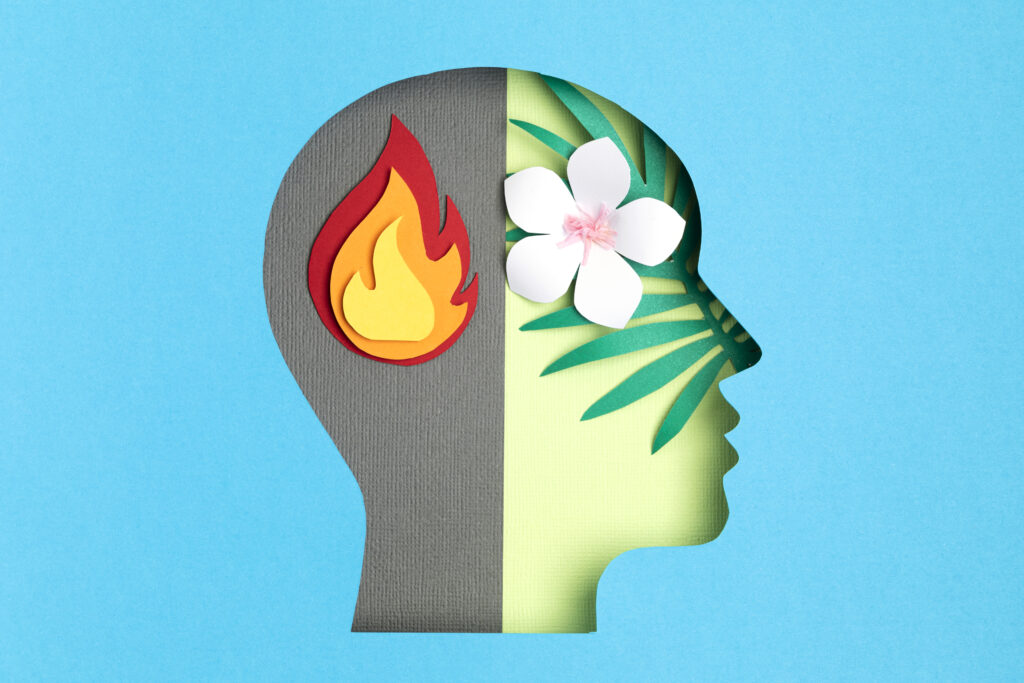
Trauma triggers are often misunderstood. People sometimes imagine them as dramatic flashbacks or sudden panic attacks, but triggers can be far quieter and more subtle. A tone of voice, a certain smell, or being ignored in a conversation can all act as triggers. Someone taking too long to reply to a message, or even success, intimacy, or calm can become triggering for people whose nervous systems learned that safety was unpredictable.
Understanding triggers is about learning how the brain and body respond to perceived danger, especially when those responses were shaped by painful experiences.
What Is a Trauma Trigger?
A trauma trigger is anything that activates the nervous system and reminds the brain, consciously or unconsciously, of a past threatening experience. It does not have to be the whole experience; just a reminder will do.
The trigger itself is not usually the real danger. The brain reacts because something in the present resembles something painful from the past. That resemblance can be emotional, sensory, relational, situational, physical, or environmental. A trigger can create reactions that feel confusing or disproportionate because the nervous system is responding not only to the present moment, but also to unresolved survival memories stored in the brain and body.
Different Types of Trauma Triggers
Triggers are deeply personal, but they often fall into common categories:
- Sensory Triggers: These are connected to the senses and include smells, loud noises, music, touch, lighting, and clothing textures. A person who experienced trauma during childhood may suddenly feel unsafe when hearing footsteps in a hallway or smelling alcohol, even if they are currently safe. The sensory system is powerful because traumatic memories are often stored in fragments rather than complete narratives.
- Emotional Triggers: Sometimes it is not an event but a feeling that activates the nervous system. Common emotional triggers include rejection, shame, helplessness, feeling trapped, loneliness, and criticism. For example, constructive feedback at work may unconsciously connect to earlier experiences of humiliation or emotional abuse.
- Relational Triggers: Relationships are one of the most common sources of triggering because humans are wired for attachment and safety through connection. Triggers can emerge through conflict, silence, withdrawal, abandonment fears, inconsistency, feeling misunderstood, authority figures, and intimacy. Someone with relational trauma may become intensely anxious when a loved one becomes distant, even temporarily.
- Situational Triggers: Certain environments or circumstances can activate survival responses, such as crowds, financial stress, public speaking, driving, and hospitals. The nervous system remembers situations associated with danger and prepares the body to survive again.
- Internal Triggers: Not all triggers come from outside the body. Internal triggers include a rapid heartbeat, pain, fatigue, hunger, arousal, and certain thoughts or memories. This is one reason trauma survivors can sometimes fear their own bodily sensations.
How Trauma Triggers Show Up
Triggers do not look the same for everyone. Some reactions are obvious, while others are hidden beneath behaviours people mistake for personality traits, such as the fight response, control, defensiveness, arguing, and perfectionism. Underneath the reaction is often fear or vulnerability.
- The Flight Response: The brain seeks safety through escape or movement. This can appear as anxiety, overworking, panic, busyness, and avoidance. People in flight mode often struggle to slow down because stillness itself feels unsafe.
- The Freeze Response: The nervous system shuts down to survive overwhelm. This may look like numbness, dissociation, brain fog, an inability to act, and emotional shutdown. Many people criticise themselves for “doing nothing” during stress, which can bring a huge sense of shame, when in reality their nervous system has entered a biological survival state.
- The Fawn Response: This response involves seeking safety through pleasing others. Examples include over-apologising, not saying no, people-pleasing, and being hyper-aware of other people’s moods. The nervous system learns that survival depends on keeping others happy.
What Part of the Brain Comes Online During a Trigger?
Trauma responses involve several major brain systems working together:
- The Amygdala (The Alarm System): The amygdala scans constantly for danger. When a trigger appears, the amygdala can react before the thinking brain fully processes what is happening. It sounds the internal alarm and prepares the body for survival. This is why trauma reactions can feel immediate and involuntary.
- The Prefrontal Cortex (The Thinking Brain): The prefrontal cortex helps with logic, decision making, regulation, perspective, and impulse control. During intense triggering, this part of the brain becomes less active. People often describe this by saying they could not think clearly, they over-reacted, or they knew they were safe but their body did not believe it. The survival brain temporarily overrides the reasoning brain.
- The Hippocampus (Memory and Context): The hippocampus helps organise memories and distinguish past from present. Trauma can disrupt this process, which is why triggers can make old experiences feel current and immediate rather than historical.
- The Nervous System and Body: Trauma is not only psychological; it is physiological. When triggered, the body may experience an increased heart rate, muscle tension, sweating, shallow breathing, and digestive changes. The body prepares for danger even when there is no objective threat.
People often judge themselves for their reactions, but trauma responses are not signs of weakness; they are adaptations. The nervous system learns through repetition. If someone spent years in environments where they were unsafe, unpredictable, criticised, neglected, or harmed, their brain became highly skilled at detecting possible danger. The problem is that survival systems designed for past danger can continue activating long after the danger has passed.
How We Can Deal With Trauma Triggers
Healing from triggers is not about never getting activated again; it is about building awareness, regulation, safety, and recovery capacity.
1. Learn to Identify Your Triggers
Awareness is the first step. Sometimes the trigger is not the event itself, but what the nervous system believes the event means.
2. Regulate the Body Before the Mind
When survival responses activate, logic alone often does not help. The nervous system usually responds better to body-based regulation first, such as slow breathing, grounding exercises, movement, cold water, feeling your feet on the floor, or gentle stretching. The goal is not to suppress emotion but to help the body recognise present safety.
3. Separate Past From Present
A powerful question during triggering is: “How old does this feeling feel?” Often, the emotional intensity belongs partly to earlier experiences. Reminding yourself that this is a trigger, your body is remembering, or that you are safe right now can help reconnect the brain to the present moment.
4. Build Nervous System Safety
Healing is not only cognitive; it is relational and physical. Safety can be strengthened through healthy relationships and boundaries, rest, therapy, supportive communities, and self-compassion. Over time, the brain can learn that the world is no longer constantly dangerous.
5. Work With a Trauma-Informed Professional
Some triggers are deeply rooted and difficult to navigate alone.
Many people believe healing means becoming permanently calm or never getting triggered again. Real healing is usually less about perfection and more about flexibility. Over time, people often notice a faster recovery after activation, more awareness of triggers, less shame around reactions, better boundaries, increased emotional regulation, and a greater sense of safety in the body. The trigger may still appear, but it no longer completely takes over.
Final Thoughts
Trauma triggers are survival responses, not character flaws. They are the nervous system’s attempt to protect us using information it learned in the past. When we understand triggers through the lens of neuroscience, attachment, and nervous system survival, we move away from self-judgement and toward compassion and healing. The brain can change; the nervous system can learn safety again. And while triggers may always be part of the human experience, they do not have to control our lives.