Procrastination is often framed as a simple failure of discipline—a gap between what we intend to do and what we actually do. But that explanation barely scratches the surface. If you look more closely, procrastination isn’t laziness. It’s a conflict between different parts of your mind, shaped by identity, sustained by hidden rules, and reinforced by a powerful sense of being stuck.
So let’s unpack what’s really going on.
The Two-Brain Tension: Survival Back Brain vs. Rational Front Brain
At the core of procrastination is a tug-of-war between two systems. For example: “I really need to leave this relationship as it is not healthy” vs “I can’t leave because I will be alone and that is terrifying.”
- The “survival back brain”: Fast, emotional, reactive, and automatic. It is wired to keep you safe and avoid discomfort, focusing on the goal of how to stay safe for the next five minutes. This is usually based on what kept you safe as a child.
- The “rational front brain”: Slow, deliberate, and goal-oriented. It plans, prioritises, and thinks long-term about how to thrive in the future. When you sit down to do something meaningful—write, study, build, or decide—the rational front brain says: “This matters. Let’s do it.”
But the survival brain scans for threat. It does not distinguish well between physical danger and psychological discomfort, or between actual and perceived threats. Uncertainty, possible failure, judgement, or even boredom can all register as risk and become the vehicle where shame, panic, or rage can escape. If we had a turbulent childhood, this part of our brain is usually stronger.
So it intervenes with thoughts like: “Let’s check something first,” “We’ll do it later when we feel ready,” or “This might go badly—better wait.” Procrastination, then, is not a failure to act; it is a successful avoidance response.
Identity: The Hidden Layer Driving Behaviour
Underneath this internal conflict sits identity. If you subconsciously believe yourself to be “not good enough,” “a failure,” or “easily overwhelmed,” then procrastination becomes consistent with who you believe you are.
Your brain prefers coherence over improvement because it likes patterns. It would rather be predictable than better. Even if your rational brain sets ambitious goals, your behaviour will quietly align with your identity. You don’t just procrastinate—you reinforce the story that you are someone who does or is what those beliefs tell you.
This is why productivity hacks often fail. They try to change behaviour without addressing the identity that sustains it. While procrastination costs you long-term, it pays you immediately. The brain is highly sensitive to immediate rewards. Until you identify what procrastination is doing for you, you’ll keep returning to it.
Ask yourself: “What is the function of procrastination? What is it doing for me?”
Stuckness: When Action Feels Impossible
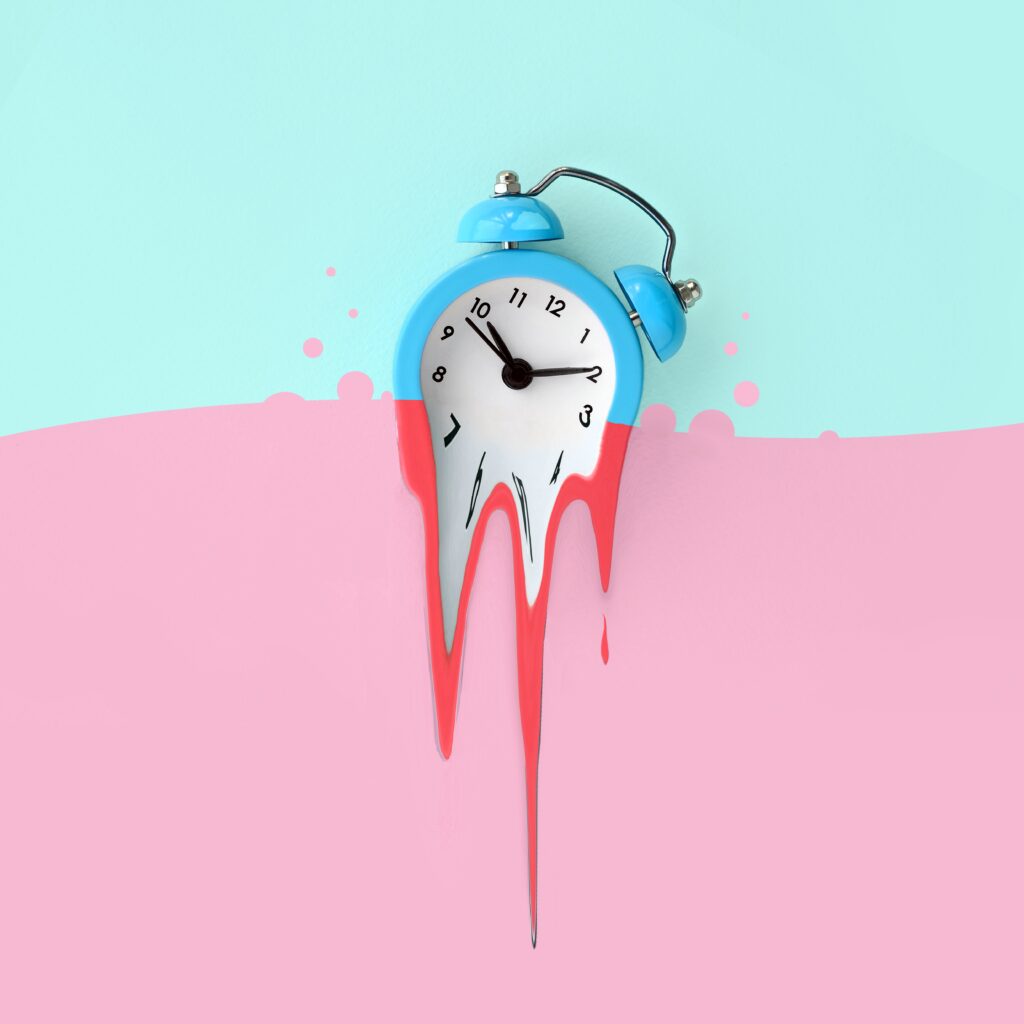
At some point, procrastination stops feeling like a choice and starts feeling like a state of stuckness. This isn’t just delay; it is mental paralysis or a toggling between the front and back brain.
You may:
- Think about the task constantly but not start.
- Feel overwhelmed before even beginning.
- Jump between distractions without relief.
- Experience low-grade anxiety or resistance.
This happens when the task feels too big or undefined, the emotional cost feels too high, your identity clashes with the action required, or the survival brain is on high alert. In this state, telling yourself to “just do it” does not work. The system is not lacking instructions; it is resisting them.
Why Logic Alone Doesn’t Fix It
You can know the deadline, the importance, and the consequences, and still not act. That is because procrastination is not a logic problem. It is an emotional regulation problem filtered through identity and hijacked by our brain. The rational front brain can generate reasons, but the survival brain controls action when discomfort is high.
Shifting Out of Procrastination
Real change happens when you address all layers—not just surface behaviour.
Calm the Survival Brain
Lower the perceived threat by making the task smaller than your resistance. Reduce the stakes (aim for a draft, not perfect output) and create safety around starting.
Identify the Payoff
Ask: “What am I getting from delaying this? What discomfort am I avoiding?” Then replace the reward. Instead of relief from avoidance, create relief through progress—even tiny progress.
Update Identity (Gradually)
Do not leap to “I am highly disciplined,” as that will not stick. Instead, start with self-compassion: “I handle things in small steps,” “I follow through more often than before,” or “I am only scared; it isn’t dangerous.” Identity shifts through evidence, not declarations.
Break Stuckness with Movement
Stuckness feeds on stillness. Action—even imperfect action—breaks the loop. Open the document, write one sentence, or work for two minutes. This changes your state.
Final Thought
Procrastination is not a character flaw. It is a system working exactly as designed—protecting you, rewarding you, and reinforcing who you believe yourself to be. Once you see the system clearly—the survival brain, identity, and stuckness—you gain the ability to change the conditions that make procrastination inevitable. That is where real momentum begins.